Hickory Rooted
Hickory Rooted, a joint project of Wild Potomac and the REED Center for Ecosystem Reintegration, is an experiment in building a gift economy that roots us in land and community. Its mission is community-scale production of culinary oils and flours from wild-foraged and regeneratively grown tree nuts.
You’re invited!
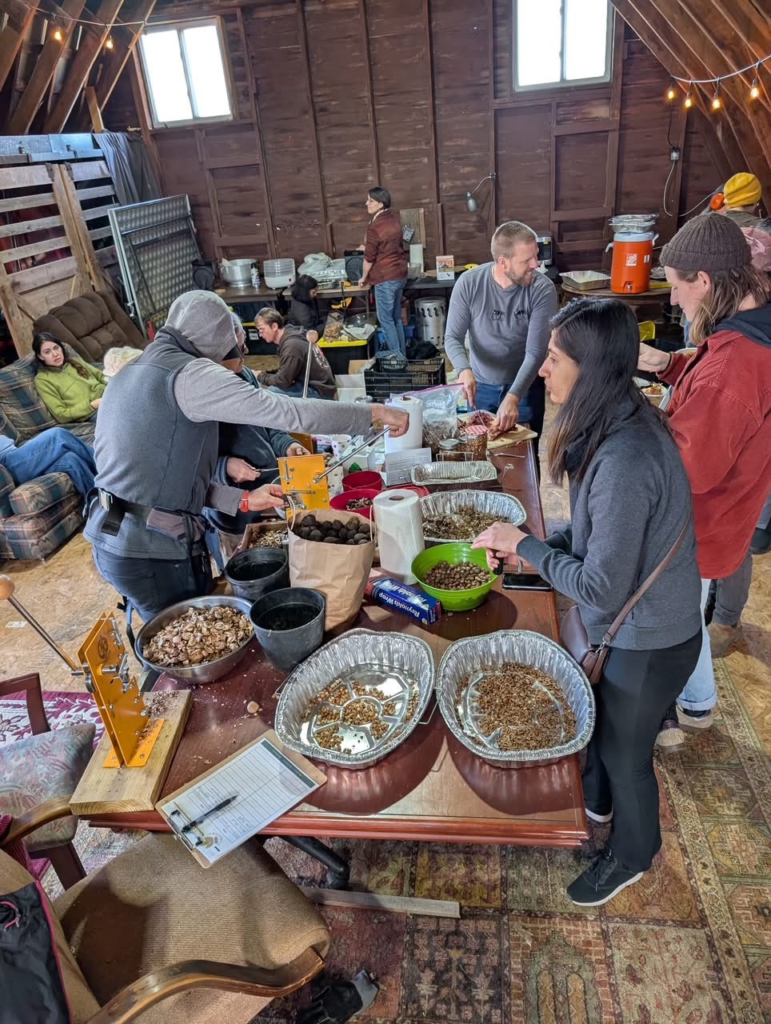
You’re invited to participate this year. Help us make hickory oil by bringing us foraged nuts of carya cordiformis on four designated days this winter. We’ll press your nuts into oil using our commercial oil press. The oil we make from your nuts is our gift to you. Your return gift can be as much or as little as feels right to you. Instead of a sense of obligation, let yourself be guided by gratitude. Read on to learn how it works!
Frequently Asked Questions
What nuts should I bring?
For this project, you should bring only the husked, cured nuts of the the yellowbud, aka bitternut, hickory tree (carya cordiformis). Yellowbuds are one of the most common hickories in our region. Download the Falling Fruit app to give and receive information on where to find yellowbud trees where foraging is allowed.
When should I bring nuts?
You can deliver your nuts to us at one of several Wild Harvest Workshops we’re planning to host throughout the watershed this winter. To be notified about those Workshops, sign up for our newsletter. We will also post the Workshops on our events calendar.
Why yellowbud hickory nuts?
Yellowbud hickories are an abundant and untapped wild food source in our region. Although the nut is high in tannins and bitter to the taste, the bitter tannins stay behind when the dried nut is pressed for oil. The result is a tasty, versatile cooking oil high in healthy fats.
How do I identify yellowbud hickory trees?
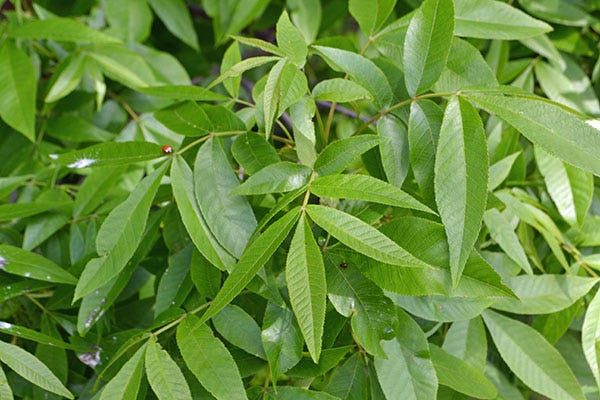
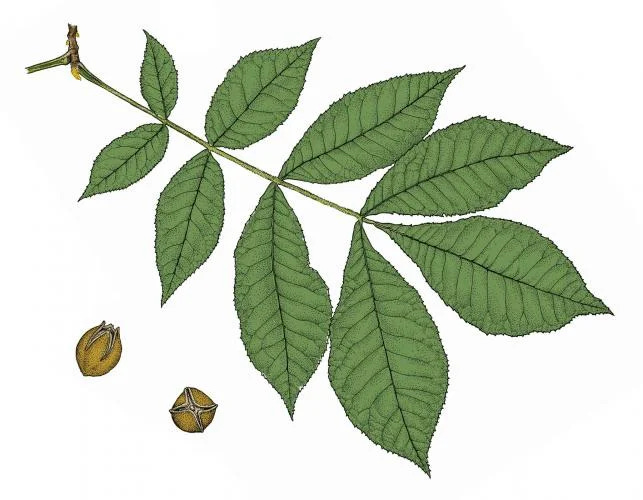
As their name implies, yellowbud hickories have distinctive yellow buds in spring. During warmer months and into the fall, they have alternate leaves with 7-11 lance-shaped leaflets. Their bark is gray and rough, but smoother than most other hickories. The oval-shaped nuts, at least a few of which can usually be found near the trees throughout the year, are larger than most acorns but smaller than the nuts of most other hickories. The nuts have a thin husk with 4 ribs that begin at one end and stop in the middle of the husk. Ripe yellowbud nuts tend to drop between late September and mid-November.
Where can I find yellowbud hickory nuts?
Yellowbuds are one of the most common hickories in our region. Download the Falling Fruit app to give and receive information on where to find yellowbud trees where foraging is allowed.
What is a gift economy?
A gift economy is a way to exchange resources and meet needs through giving and receiving in community. In contrast to a market economy, no prices are charged in a gift economy. A gift economy relies instead on the innate desire of those who have received to give in return.
What should I give as a return gift?
We trust you to give the return gift that feels right to you in the circumstances. If it feels right to give nothing in return, that’s ok. (Really!) And if you feel motivated to give generously in return, we hope you trust that feeling too. Both money and a portion of your pressed hickory oil are welcome return gifts.
For anyone who wants the guidance of more information, Wild Potomac and the REED Center are collectively incurring significant costs in both time and money to make the Hickory Rooted Project possible. Some similar processing operations charge a price equal to ½ the value of the finished product. Yellowbud hickory oil retails for about $65 per quart. Results vary, but 5 gallons of good-quality, cured nuts will typically yield around ½ gallon (2 quarts) of oil.